
You set the thermostat, hear the outdoor unit start and feel warm air at the vents. The blower is moving air across the evaporator coil, but the heat is not leaving your house. That points to a failed part in the cooling loop, and the part decides the repair.
United States · 22,795 covered ZIP codes
AC Unit Repair: Connect With a Local Specialist
AC unit repair starts with the symptom you are looking at. Pick the line that matches, then call before the fault spreads.
- Name the symptom: no cooling, warm air, ice, water, no start or a noisy outdoor unit.
- A failed part keeps damaging the rest of the unit while it runs.
- Everything starts with one phone call.
 Call before the damage grows(310) 424-7490
What is the AC doing?
Check your ZIP code
Enter the ZIP code of the property to see whether it is in the coverage area for ac unit repair connections.
Call (310) 424-7490Recognise the problem
What you can see and hear, and what the system is hiding
The visible and audible signs of a failing AC are the first column. The second is the failed part behind them, which keeps wearing the unit after the room cools down.
Guides by symptom
Immediate signs
- Warm air from the ventsThe indoor fan runs but the air stays warm, which points to a failure on the cooling side of the system.
- A unit that runs and never reaches the set temperatureThe compressor or the outdoor fan is not moving the heat out of the house.
- Ice on the lines or the indoor coilBlocked airflow or a failing part lets the coil drop below freezing.
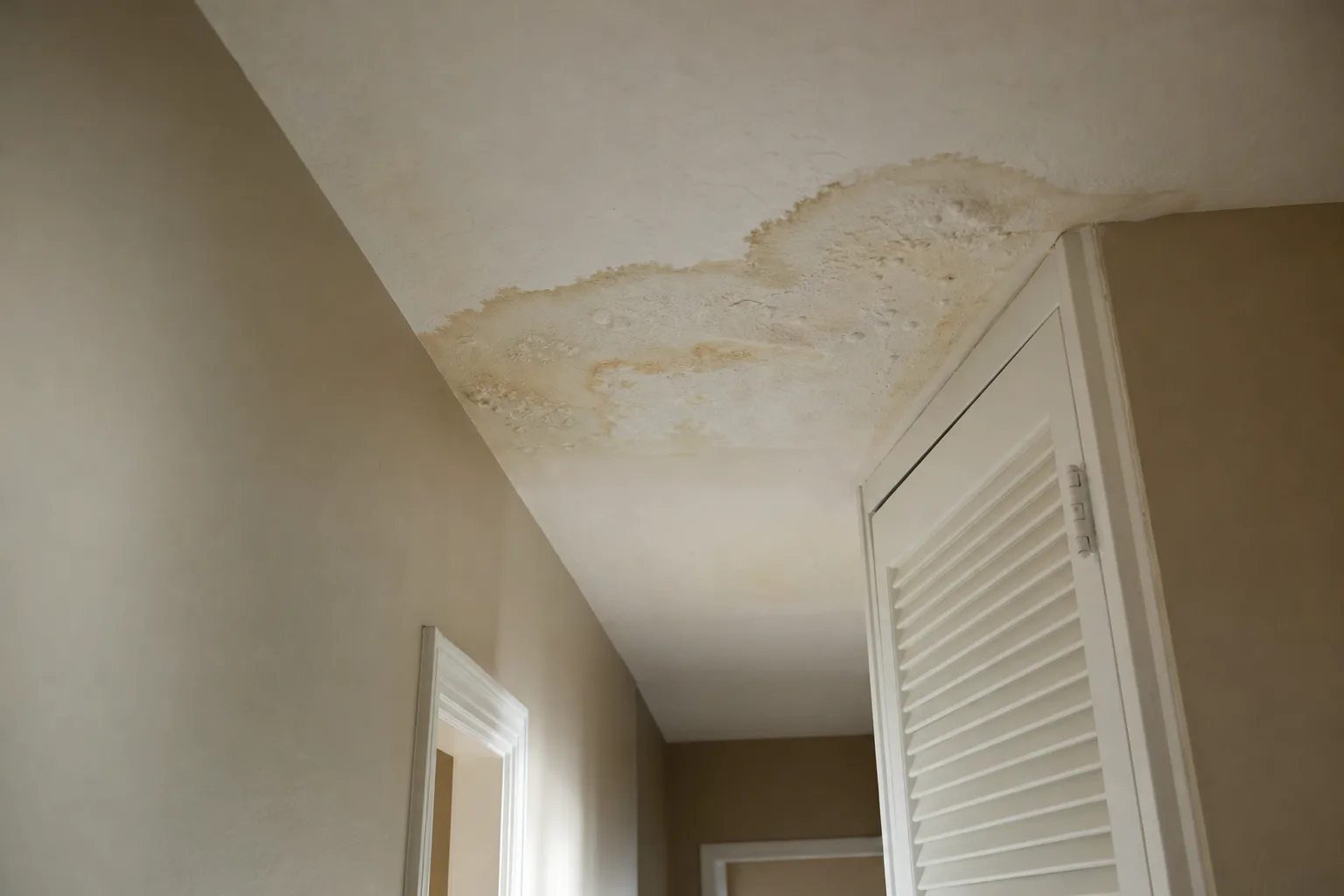
- Water around the indoor unitA blocked or failed drain path sends condensate onto the floor, the ceiling or the drywall.
Hidden conditions
- A weak capacitor or contactorA worn start part makes the motors draw extra current, so the compressor and fan motor wear faster each cycle.
- A seized or failing fan motorA motor that cannot turn draws current until it trips the breaker or burns out.
- A compressor running hotRunning on with a failed start or fan part overheats the compressor, the costliest part in the unit.
- Water in the drain pan and the ceiling belowOverflow soaks insulation and drywall long before a stain shows.
Why call
Why the first call matters
A failed part keeps damaging the unit while it runs. Call as soon as the cooling stops, while the repair can stay small.
- A unit that runs without cooling usually has one failed part, and every hour it runs adds wear to the compressor and the motors.
- Restarting a unit that trips its breaker repeats the fault; a specialist finds the failed part instead.
- Calls come from every state in the coverage area: call when the cooling fails, not after the compressor or the ceiling below it takes the damage.
1
Repair, not guesswork
A failed capacitor, contactor, motor or drain path is a repair job: the call is about the part that failed.
2
Local conditions
Heat, humidity and housing age change how units fail, so each state page sets out its own sourced conditions.
3
Call before it fails
Switch the unit off at the thermostat and leave the panels alone. Then call: the sooner the fault is found, the more of the system stays in place.
The process
Guesswork against a diagnosis-first repair
The right-hand column describes the order a professional AC unit repair follows. The left shows what tends to happen when a unit is restarted again and again or left to run.
| Stage | Guesswork or delay | Diagnosis-first repair |
|---|---|---|
| Diagnosis | Restarting a failing unit hides the fault and adds wear to every part on the circuit. | The fault is isolated to one part or circuit before anything is swapped. |
| The electrical side | A breaker reset again and again means a short or a seized motor is still there. | Start parts, contactors, wiring and motors are checked and the failed part is named. |
| Airflow and drainage | Ice and water appear when airflow is blocked or the drain path fails, and they return if the cause stays. | The cause of the ice or water is found and cleared so the repair holds. |
| The repair | Running the unit on a failed part ends in a compressor or motor failure that costs far more. | The failed part is repaired or swapped, then the unit runs a full cooling cycle. |
What you are seeing
Your AC Runs but the House Stays Warm
A unit can fail in more ways than a dead system. A unit can hum with no fan spin, click with no start, or run briefly and stop before the rooms cool. Each sign names a different part, and professional air conditioner repair starts by matching the sign to the part.
Each of these symptoms sits on the cooling side of a central or split air conditioner. Naming the part is not your job: describe what you hear and see, and the connection puts you in touch with a local AC repair specialist.
What waiting costs
How a Failed Part Stops the Cooling
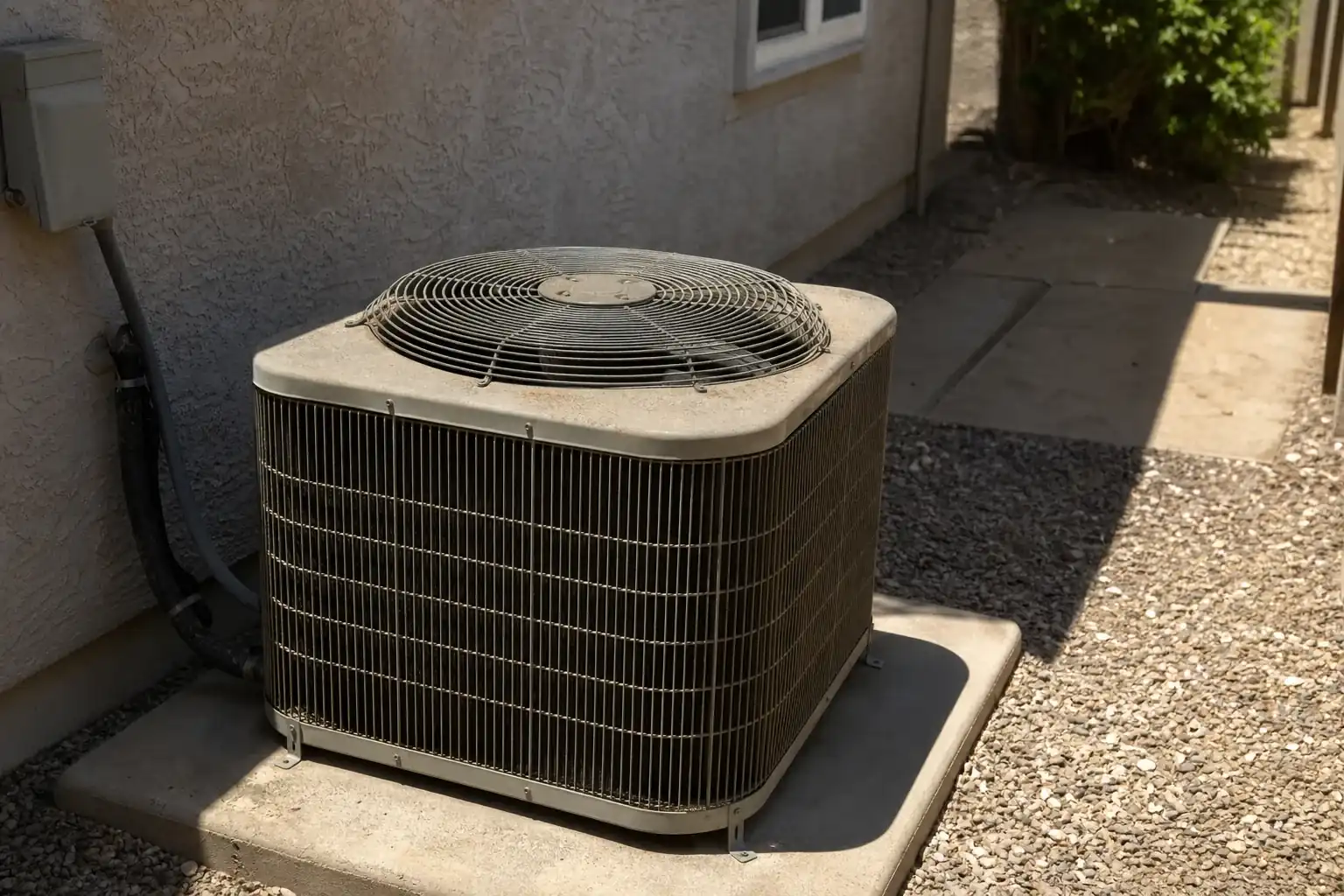
Your AC does not make cold air. It moves heat out of your house, and it needs every part in the loop to do that. The evaporator coil indoors absorbs heat from the air your blower pushes across it, the compressor moves that heat along, and the condenser coil and fan outdoors release it.
When one part stops, the loop stops. A failed capacitor leaves the compressor or the fan motor without the push it needs to start, a worn contactor cuts power to the outdoor unit, and a seized condenser fan motor traps the heat inside the coil.
The failed part is often small next to the damage it causes. That is why guessing at the cause costs you time. Two units that blow warm air can have different faults, and the wrong guess leaves the fault in place while the system keeps running.
Leave it switched off
Stop the Unit at the Thermostat and Leave It Alone
If your unit hums without starting, blows warm air, shows ice or drips water, switch it off at the thermostat. A system that keeps running with a fault pulls extra current through the motors and the compressor, and every extra cycle adds strain to the failed part and the ones around it. Leave the panels, the wiring and the outdoor disconnect alone.
The capacitor holds a charge after the power goes off, and the parts behind the access panels carry live current. Professional repair covers that work, and your part is to stop the unit and make the call. The same goes for the coil, the drain line and the fan: do not open, rinse or probe them to chase a symptom. Keep the thermostat off, keep the area around the unit clear and call.
Housing and heat
What Waiting Costs Your System and Your Home
Every hour a faulty AC keeps running, you pay for cooling that never arrives. The motors draw current, the compressor cycles against a fault, and the house keeps absorbing heat through the roof and the walls.
Humidity is the other half of the loss. A unit that stops cooling stops pulling moisture out of the air, and a warm, damp house puts cabinets, closets and drywall at risk.
A drain path that has failed adds water to the cost. Water that reaches the ceiling, the insulation or the drywall turns a repair into a property loss, and that loss grows every day the unit stays on.
How the call works
How a Weak Part Becomes a Failed Compressor
A weak capacitor rarely fails in one afternoon. It starts with a slow fan, a delayed start or a hum, and you may notice only that the house takes longer to cool.
A weak capacitor leaves the compressor and the fan motor to start without full support. Each hard start adds heat inside the compressor, and a compressor that has overheated several times can seize.
The part you can diagnose today can become a compressor job by the end of the season. Repair the weak part while it is the only part that failed.
Repair scope
What Professional AC Unit Repair Covers
Professional AC unit repair is a sequence, not a guess: isolate the failed part, test the electrical side, check airflow and drainage, repair the fault and confirm it with a full cooling cycle. Each step rules out causes before a part changes.
- Isolating the part
separates a failed capacitor, contactor, relay or motor from a fault upstream of it.
- Electrical side
tests the voltage, the control wiring and the switches that tell your unit to start.
- Airflow and drainage
checks the blower, the evaporator coil and the drain path for the restriction behind weak air, ice and water.
- The repair
fixes the failed part and the condition that damaged it.
- A full cooling cycle
runs your unit from start to finish and confirms the air at your vents has cooled.
That sequence is the scope you are connecting with. It is the difference between a part that stays fixed and a symptom that returns in a week.
Hear a hum, feel warm air or see ice? Call now to connect with a local AC repair specialist.
(310) 424-7490Repair scope
Isolating the Failed Part
Isolation starts with what you report: a hum, a click, a silent fan, warm air, ice or water. Each symptom narrows the list of parts, and measurements remove the rest.
A unit that hums with a still fan points at the capacitor or the motor, and a unit that clicks without starting points at the contactor or the control voltage.
The goal is one confirmed fault, not a list of suspects. A part that passes a test in place and a part that fails its reading are two different findings, and only the second one belongs in your repair.
Repair scope
The Electrical Side of Your AC
Most no-start and weak-start faults sit in the electrical components inside your outdoor unit: the capacitor, the contactor, the relay and the wiring between them. Professional repair tests each one under load, because a part can read normal at rest and fail the moment it has to carry current.
The control side matters as much. A thermostat that never sends the call for cooling, a blown low-voltage fuse and a tripped float switch all leave your outdoor unit silent while the power parts are sound. Testing the control circuit before the power circuit keeps you from paying for a part that was never the fault.
Repair scope
Airflow and Drainage Checks
Cooling needs air moving across the evaporator coil and water leaving the drain pan. A blower motor that runs slow, a coil that has lost its airflow and a condensate line that backs up each produce a different symptom: weak air, ice on the coil or water at your indoor unit.
Professional repair traces your symptom back along that path. It finds where the airflow dropped or where the drain stopped, then repairs that point so the fault does not return the next time the unit runs.
Drying verified
The Repair and a Full Cooling Cycle
A repair is not finished when the part is in. It is finished when your unit starts, the indoor coil cools, the outdoor fan runs and the air at your vents drops in temperature through a full cycle.
Professional repair also looks at what damaged the failed part, such as a strained motor or restricted airflow, so the repair holds. You should come away from the job with the cause named and your house cooling.
What you are seeing
Warm Air From Your Vents
Warm air from a running blower is the most common reason people look for AC repair service, and the cause sits outdoors as often as indoors. A condenser fan that does not spin, a failed capacitor or a contactor that does not close each leave the air at your vents at room temperature. Your symptom has a name, AC blowing warm air, and a short list of likely parts.
A house that cools slowly rather than not at all follows a different path. AC not cooling often starts with a tired outdoor fan or a weak start part, and the longer the unit runs that way, the more heat your compressor carries. If the air at your vents has not cooled, switch the unit off at the thermostat and make the call. A repair that begins at the first warm breath is smaller than one that begins after the compressor trips.
What you are seeing
Water Around Your Indoor Unit
Water at your indoor unit, on the floor beneath it or on the ceiling below it means the condensate path has stopped. Your AC pulls water out of the air as it cools, and that water has to leave through the drain pan and the drain line.
A blockage, a cracked pan or a drain path that backs up sends it into your home instead. Water on a ceiling or in a wall is a property emergency, not an AC inconvenience. Switch the unit off at the thermostat, keep the area clear and call, because AC leaking water adds to the damage every cycle the unit runs.
What you are seeing
Ice on the Coil or the Lines
Ice on the copper line outside your unit, on the evaporator coil or on the indoor cabinet means the coil has dropped below the point where water stays liquid. Restricted airflow or a fault in the cooling loop causes it, and running the unit longer builds more ice.
AC freezing up ends in one of two ways. The ice melts into your drain pan faster than the pan can drain and you get water, or the compressor keeps running against a coil it cannot use and fails. Switch the unit off at the thermostat, leave the ice alone and call.
What you are seeing
A Unit That Will Not Start
A thermostat that calls for cooling while the unit stays dead points to the power or control path. A blown low-voltage fuse, a tripped float switch, a failed contactor and a dead capacitor each cause AC not turning on, and each needs a different repair.
When your unit starts and then drops out, the pattern changes. A compressor that overheats, a fan that stalls and a control board that cuts the cycle all produce AC not working reports that look the same from your chair and differ at the part.
Do not keep restarting the unit. Each restart sends current through a part that has already failed, and the failure can spread to the motor or the compressor beside it.
What waiting costs
Compressor Trouble Starts Small
The compressor is the largest single part in your AC, and most compressor failures begin somewhere else. A weak capacitor, a failed fan motor or restricted airflow makes the compressor start hard, run hot and shut down on its overload protection.
AC compressor repair is the largest job in cooling-side work, and it is the repair an early call is most likely to avoid. Catch the capacitor or the fan motor first and you keep the compressor; wait, and you may lose it.
What you are seeing
A Silent or Slow Outdoor Fan
You step outside and the fan on your outdoor unit is still, slow or humming without turning. A condenser fan carries heat away from the coil, and when it stops the compressor runs hotter until it trips off or fails.
AC fan not working comes from a failed motor, a bad capacitor or a seized bearing. Do not reach into the fan or spin the blades, because the parts behind the grille carry live current and a blade can start without warning.
How the call works
When Your Call Cannot Wait
Some AC faults cannot sit until the weekend. Water on a ceiling, a unit that trips its breaker every time it starts, a burning smell at the outdoor unit and a compressor that runs without cooling are urgent property problems. Emergency AC repair is urgent response to property damage, and nobody can promise you an arrival time.
What you control is how fast you stop the damage: switch the unit off, keep the area clear and make the call. Call early in the symptom, before the water spreads or the compressor overheats. A short call at the first sign keeps the repair small.
State rules and checks
What Drives the Scope of Your Repair
The failed part, not the season, sets the size of an AC repair. A capacitor, a contactor or a relay is a short job once you have named it, a condenser fan motor or a blower motor takes more, and a compressor takes the most.
Access to the unit, its age, the condition of the parts around the failure and the damage the fault has already done also move the scope. A repair that finds water in your ceiling is a bigger job than the drain part that caused it.
That is why AC service and repair starts with a diagnosis, not a number. The connection carries no price, because each specialist sets their own. Before you agree to any work, ask for the failed part, the repair and the price in plain terms.
Drying verified
What to Confirm Before You Hire
Hiring is your choice once the facts are in. Confirm the license and the insurance the work requires in your state, because the duty to verify them stays with you.
Confirm that the failed part is named, the repair explained and the price stated in writing before work starts. Confirm that the repair ends with a full cooling cycle you can feel at the vents.
Every specialist reached through the connection is independent. The connection does not repair the unit, and it does not stand behind the work performed.
Documentation
Records to Keep From the First Symptom
Keep a short record from the day the symptom starts: the date, what you heard, whether the air was warm or the unit stopped, and any water or ice seen. A clear record shortens the diagnosis because it shows the pattern.
Photograph water, ice and damaged materials before anyone touches them. Those photos and notes give a clear record of when the fault began and what it touched.
When the job ends, keep the written repair record: the part named, the work done and the result of the full cooling cycle. Keep it for the next time the AC changes its sound.
State rules and checks
How the Call Works
Tap the call button and you reach a connection service, not an AC repair business. The service connects you with a local AC repair specialist in your area, and the connection is free and independent.
Describe the symptom in your own words: the sound, the warm air, the ice or the water. Coverage depends on the area, and the coverage checker confirms with a ZIP code whether your home is covered.
Hiring the specialist is your decision, and the connection costs you nothing. That is how an AC unit repair service should start: with your facts and a single call.
What you are seeing
AC Repair Across the States
A failed capacitor reads the same in every state, and the call that connects you with a local AC repair specialist works the same way too. Coverage follows your area, from AC repair in California and AC repair in Texas to AC unit repair in Florida and AC unit repair in Pennsylvania.
The same sequence applies in AC repair in New York, AC repair in Ohio, AC repair in Massachusetts and AC repair in New Jersey: isolate the part, protect the property and make the call. If the home sits in another state, the coverage checker shows whether the area is covered, and the same steps of isolation, repair and a full cooling cycle apply.
Common questions
AC Unit Repair Questions
What does AC unit repair cover?
AC unit repair covers the cooling side of a central or split air conditioner: a unit that blows warm air, will not start, freezes up, leaks water or has a failed capacitor, contactor, relay, fan motor, blower motor or compressor. The repair ends with a full cooling cycle that confirms your air has cooled.
Does the connection cost anything?
The connection is free. The specialist you reach sets the price for the repair, and you decide whether to hire anyone. The call that connects you costs nothing.
Why is my AC blowing warm air?
Warm air means the heat is not leaving the house. A failed capacitor, a contactor that does not close, a condenser fan that does not spin or a compressor that has stopped can each cause it, and only a diagnosis names the part.
Should I keep running my AC if it is leaking or freezing?
No. Switch the unit off at the thermostat, leave the ice and the water alone and call. A unit that keeps running with a drain fault or an iced coil adds damage to the ceiling, the floor or the compressor.
Can I fix a failed AC part myself?
No. The capacitor holds a charge after the power goes off, and the parts behind the panels carry live current. Switch the unit off at the thermostat and leave the repair to a local AC repair specialist.
How do I know which part failed?
Knowing the part is not required. A hum with a still fan, a click without a start, ice on the coil and water at the indoor unit each point to different parts, and professional repair isolates the one that failed with tests, not guesses.
Who repairs my AC after I call?
You reach an independent local AC repair specialist. The connection does not employ the specialist, does not set the price and does not repair your unit, so you confirm the license and the insurance yourself.
How do I confirm that my area is covered?
Enter your ZIP code in the coverage checker on the home page. It shows whether your area is covered, and it gives no price or estimate.
Service area
States in the coverage area
- California 1,973 ZIP codes
- Texas 1,512 ZIP codes
- Florida 1,357 ZIP codes
- Pennsylvania 1,261 ZIP codes
- New York 1,384 ZIP codes
- Ohio 995 ZIP codes
- Massachusetts 631 ZIP codes
- New Jersey 722 ZIP codes
Coverage
22,795 ZIP codes are covered across the United States. Use the ZIP check near the top of this page, or call and the address of the unit confirms coverage.
Coverage is by ZIP code, not by state: a state page lists the areas it covers.
A failed part keeps damaging the unit while it runs.
Call before the compressor, the outdoor fan motor or the ceiling below the unit takes the damage.