
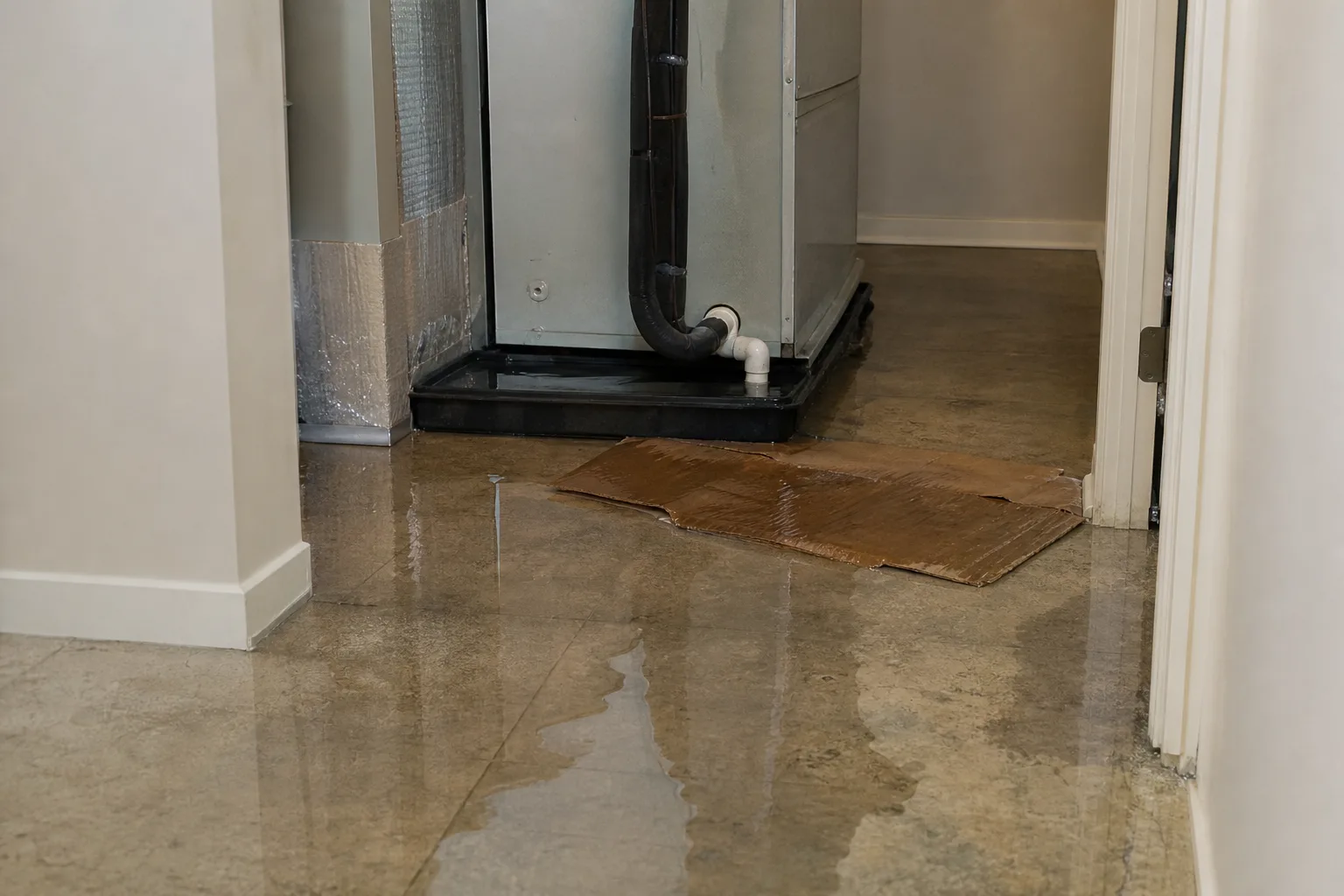
Water shows up where the indoor unit sits: on the floor beneath a closet unit, in an attic pan, along a ceiling seam or as a damp stain that keeps growing. Most people start with the words my AC unit is leaking water, and that sentence points to the condensate path before anything else.
Guide · ac unit repair
AC Leaking Water
You find water under the indoor unit, a stain on the ceiling or a wet closet floor, and your AC unit leaking water is the cause. The condensate path has stopped carrying moisture out, and every cycle puts more of it into your house. A free call connects you with a local AC repair specialist, and the hiring choice stays yours.
Check your ZIP code
Enter the ZIP code of the property to see whether it is in the coverage area for ac unit repair connections.
Call (310) 424-7490What you are seeing
Water Leaking From an AC Unit Inside Your Home
Your cooling system is not supposed to release water into the rooms. The coil collects it, and the pan and the drain line carry it out, so water in your house means one link in that path has failed.
What waiting costs
How Condensate Leaves Your AC and Why It Stops
Cooling pulls moisture out of your indoor air, and that moisture drips off the evaporator coil into the drain pan. The pan sends it down the drain line, and a float switch cuts the unit off if the level rises.
A cracked pan or a failed float switch spills fastest. Ice makes it worse. A coil that has frozen melts into a pan that cannot carry the load, which is why AC freezing up and a leak often arrive together.
Housing and heat
What Water Does to Your Ceiling, Floor and Wiring
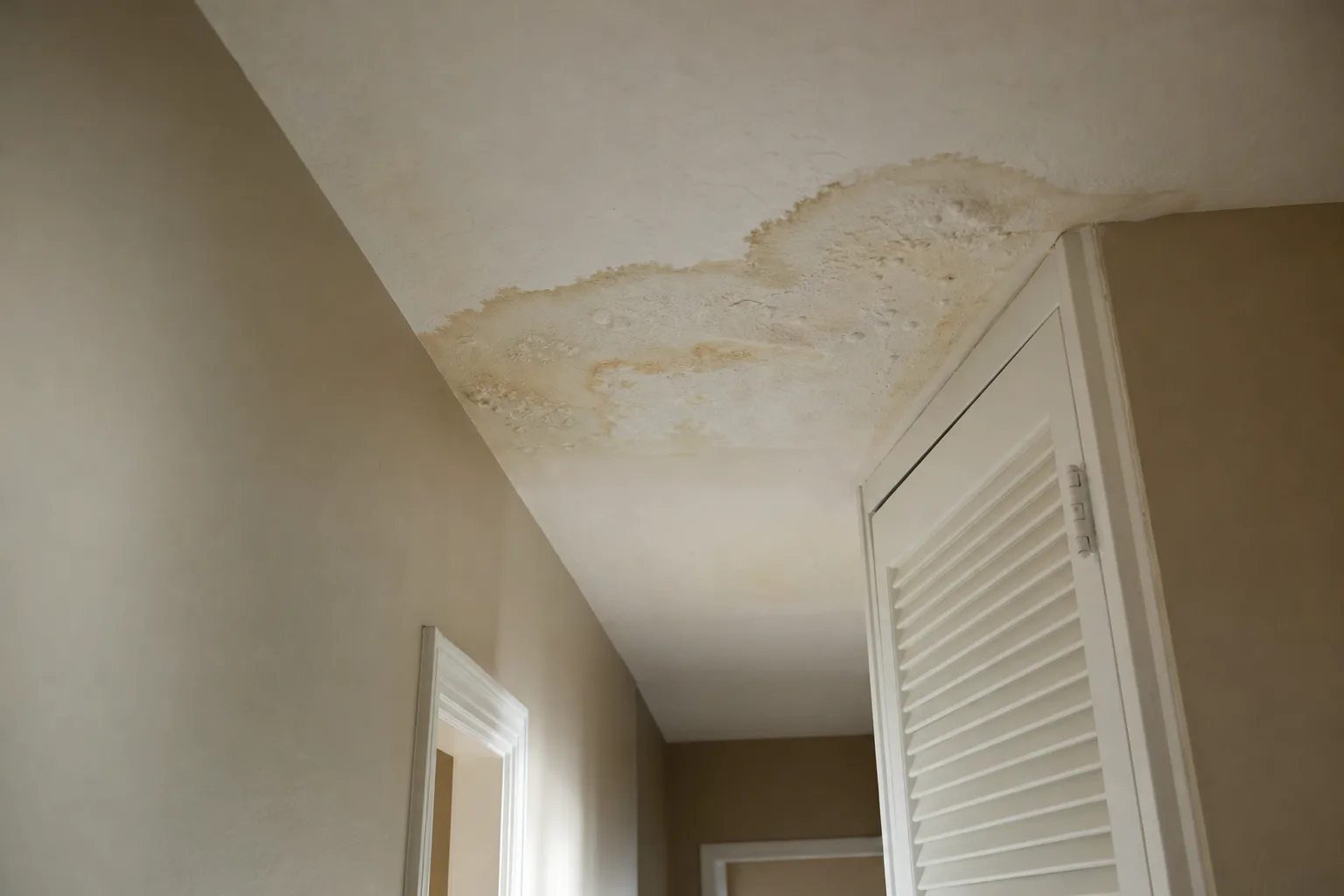
Water soaks insulation first, then drywall, then the framing and flooring below. A ceiling that was damp on Monday can be stained, soft and sagging by the weekend.
Wet insulation holds water long after the unit stops, and wet materials near the indoor cabinet reach its electrical parts. Switching off stops the supply, but the water already in your house keeps spreading until you repair the cause.
Leave it switched off
Stop the Unit and Keep Water Away From It
Set your thermostat to off the moment you see water. Keep your feet out of the pool beneath the unit and leave the access covers, the wiring and the drain line alone.
If water reaches the ceiling or a light fixture, stay out of that room until it dries, and make the call. Your job is to stop the unit and photograph the damage, not to chase the water.
Water under the unit or on the ceiling? Call now to connect with a local AC repair specialist.
(310) 424-7490Repair scope
What Professional Repair Covers for Leaks
Professional repair traces the water from the coil down: the coil, the pan, the drain connection and the float switch. It also finds why the water appeared, because restricted airflow that froze the coil needs repair as much as the drain does.
The repair lands on the failed point, and the pan is watched through a full run until water leaves as it should. That outcome repairs your leak; wiping up what spilled does not.
How the call works
From a Damp Panel to a Sagging Ceiling
The first drip leaves a spot on a ceiling panel. A few cycles later the panel holds water, softens and discolors, and its weight pulls the drywall away from the joists.
Call while your leak is a spot and the job stays at the AC. Coverage reaches homes in AC repair in New York and beyond, and emergency AC repair covers a leak that has already reached the ceiling.
Documentation
Photos That Protect Your Records
Photograph the stain, the pan, the floor and any wet materials before anything is moved. Note the date, the room and whether the unit ran when the water appeared. Keep those photos with your written repair record, because they show when the leak began and what it reached.
Common questions
AC Leaking Water Questions
Why is my AC leaking water inside my house?
Condensate has stopped leaving through the drain path. A cracked pan, a blocked drain connection, a failed float switch or a coil that froze and melted can each cause it.
Should I keep running my AC if it leaks water?
No. Turn the thermostat to off and make the call. A unit that keeps running adds water to your ceiling and floor every cycle.
Is a leaking AC an emergency?
It becomes one when water reaches a ceiling, a wall or a light fixture. Water that spreads through insulation and drywall turns a small repair into a property loss.
A failed part keeps damaging the unit while it runs.
Call before the compressor, the outdoor fan motor or the ceiling below the unit takes the damage.