
You spot a brown ring overhead, a soft patch on the closet floor or a slow drip at the base of the indoor unit. The water forms on the evaporator coil and travels to a pan, so a stain in your house means that route has broken somewhere.
State · ac unit repair
AC Repair in New York
A brown stain widens on the ceiling beneath your indoor unit, or water beads along its base while your rooms stay warm, and you need AC repair in New York that begins at the failed part. One free call connects you with a local AC repair specialist, and hiring anyone is your decision.
Local conditions
What shapes AC repair in New York
Heat and humidity
ClimateNew York's average temperature from June through August was 66.9 degrees Fahrenheit across the 30 years from 1991 to 2020. Source: NOAA National Centers for Environmental Information, Climate at a Glance, Statewide Time Series (mean of the yearly June-August values 1991-2020), retrieved 2026-11-16.
Cooler summers let a unit sit idle for weeks, so a failed part is often found only on the first hot day, when the unit has to carry the full load.Housing stock
HousingThe median housing unit in New York was built in 1959, and 73 percent of the state's housing units were built before 1980. Source: U.S. Census Bureau, American Community Survey (ACS 2024 1-year), tables B25035 and B25034, as published by Census Reporter, retrieved 2026-11-12.
Older homes have had more years of cooling-system wear, and an aging outdoor unit or indoor drain path is where repairs concentrate.Checking a business
VerificationIn New York City, the Department of Consumer and Worker Protection says a city home improvement license is needed for construction, repair, remodeling or other home improvement work on any residential building in the city. Source: NYC Department of Consumer and Worker Protection (DCWP), Home Improvement license application checklist (city rule; no state HVAC license page was found), retrieved 2026-11-16.
A New York City owner can check a business's city home improvement license before signing; outside the city, the rule is set locally.Check your ZIP code
Enter the ZIP code of the property to see whether it is in the coverage area for ac unit repair connections.
Call (310) 424-7490What you are seeing
Water Beading Along the Base
Where the water first appeared points to the part that failed. Water beside a unit that still runs is the pattern in AC leaking water. Warm rooms with no water fit AC blowing warm air.
Leave it switched off
Power Down and Keep Your Hands Off
Set your thermostat to off, then leave the access covers, the drain fittings and the cutoff switch shut. Energized wiring sits close to the water.
Another cycle sends more water onto your ceiling and more load into the blower.
Water at the indoor unit or warm rooms? Call to connect with a local AC repair specialist.
(310) 424-7490What waiting costs
A Cool Summer Hides a Failing Pan or Float Switch
NOAA's Climate at a Glance puts New York's June-through-August average at 66.9°F for 1991 to 2020. Summers that mild give the condenser few demanding hours, so a cracked pan, a sticking float switch or a tired blower goes unnoticed through months of light duty.
A short run of hot days changes that. The coil condenses heavily, the weak part overflows, and your unit carries a peak load it has not seen since last year.
Local detail
Older New York Buildings and Their Drain Paths
Census figures for 2024 show that half of New York's housing units predate 1959, and 73% went up before 1980. Hardware in buildings that old has logged decades of seasons, so the outdoor unit and the indoor drain path draw most repairs, and a leak there soaks ceilings and walls from another era.
Drying verified
New York City's Home Improvement License Rule
In New York City, the Department of Consumer and Worker Protection (DCWP) states that a city home improvement license is required for construction, repair, remodeling or other home improvement work on any residential building within the city.
Before you sign, you can look up a business's city license. Beyond the city limits, the rule is set locally. The firms you reach by phone work independently of this connection. Confirming their license and insurance for your own address is your job before any work starts.
Repair scope
AC Unit Repair That Follows the Water Upstream
Professional AC unit repair in New York begins at the stain and works upstream through the pan, the condensate line, the float switch and the blower. Each stage rules out a suspect before the diagnosis names one part.
Airflow over the coil gets measured too. A weak blower lets the coil run colder than designed, and the added moisture outruns the line. The visit ends on a full cooling cycle with the pan staying dry.
How the call works
From One Drip to a Soaked Ceiling
A pan seeping on Monday can leave your drywall sodden by Sunday while the hot days continue. Plaster and old insulation hold moisture, so a stain in an older building keeps widening after the unit stops.
A call at the first drip keeps the job at the pan or the float switch. A call after a week of running can reach the blower or AC compressor repair, and the ceiling still needs its own repair.
Housing and heat
How Far the Water Travels Past Your Ceiling
Water from a failed drain path follows joists and wiring chases, so the first stain overhead often marks a longer trail. Paint blisters, baseboards swell and floorboards cup well before you see a puddle.
If you rent, or share a stairwell with other households, the same water can cross into a neighbor's ceiling. That is a reason to place your call at the first bead of moisture and to tell your landlord or building manager as well.
State rules and checks
Weigh the Explanation Before the Figure
Ask the firm to name the part that failed, the water path that showed it and the work planned, and request the answer in writing. A clear answer to all three separates a diagnosis from a guess.
The national AC repair connection sets no fee, because every firm names its own rate. Compare what each firm explains before you compare what it charges.
Common questions
New York AC Repair Questions
Why does my AC leak after a few hot days in New York?
A short hot spell makes the coil produce more water than a weak drain path can carry. Tracing the water points to the cracked pan, the float switch or the slow blower.
What does New York City require of a business doing AC repair?
The DCWP says repair work on any residential building in the city calls for a city home improvement license, and you can check one before signing. Outside the city the rule is set locally, so verification stays with you.
Does my building's age change an AC repair?
Older buildings carry more cooling seasons. With half of New York's housing units predating 1959, the outdoor unit and the drain path are where repairs gather.
Should I keep the unit running while it drips?
No. Turn it off at your thermostat and call, since each extra cycle adds water and load.
What does air conditioner repair in New York cover?
Cooling-side faults of a central or split unit: warm rooms, no start, frost, water at the indoor unit and the failed part behind each, closing with a full cooling cycle.
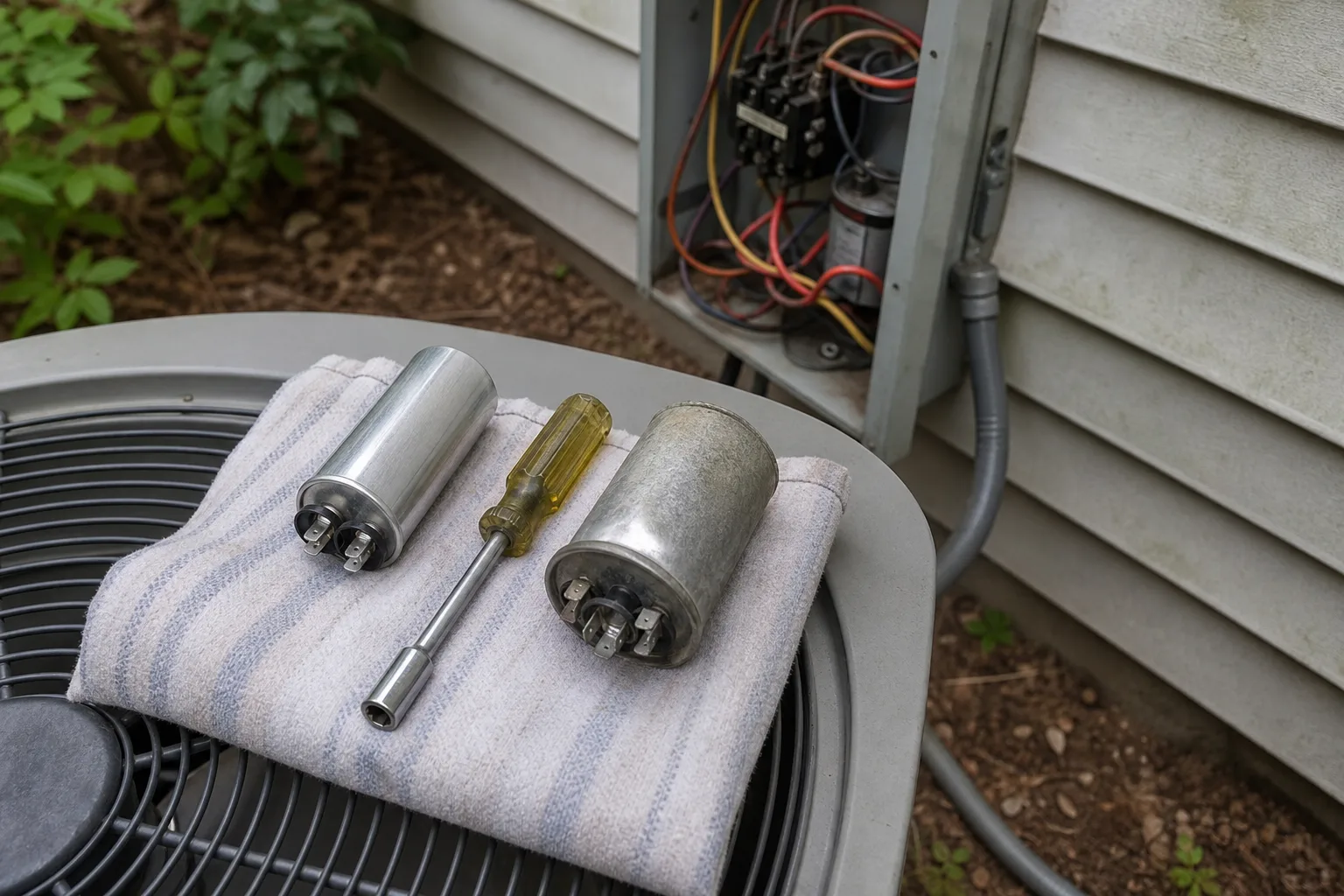
A failed part keeps damaging the unit while it runs.
Call before the compressor, the outdoor fan motor or the ceiling below the unit takes the damage.