
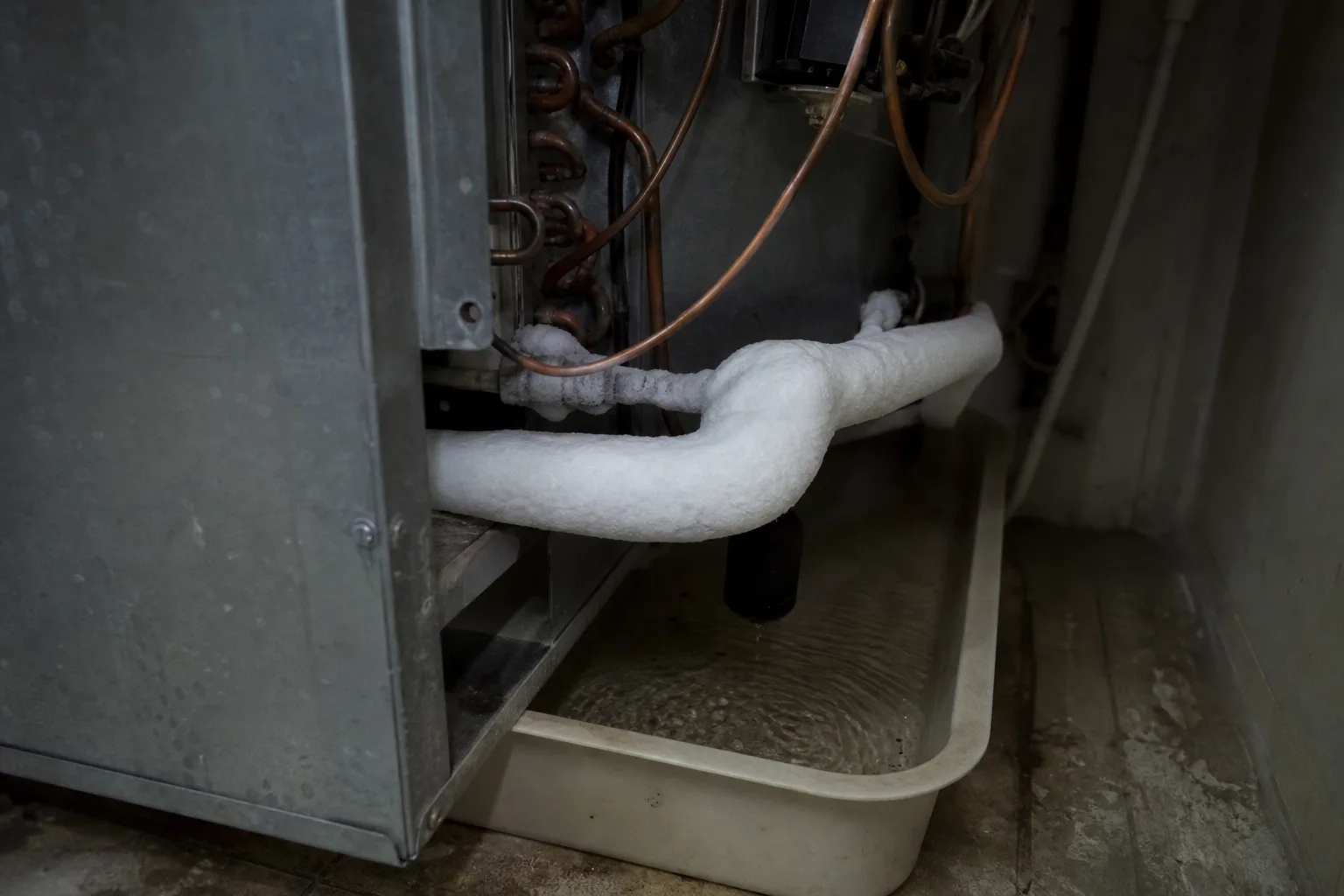
Frost appears first on the larger copper line entering the outdoor unit or on the face of the indoor coil, then thickens into a white shell. Airflow from the registers weakens as the shell grows, and the air that does emerge turns lukewarm.
Guide · ac unit repair
AC Freezing Up
Frost on the copper line or a white shell over the coil means your AC unit freezing up is already underway. Ice insulates the coil, blocks the air that should cross it and sends meltwater toward the drain pan. One phone call connects you with a local AC repair specialist, free and independent.
Check your ZIP code
Enter the ZIP code of the property to see whether it is in the coverage area for ac unit repair connections.
Call (310) 424-7490What you are seeing
Frost on the Line, Ice on the Coil
An outside AC unit freezing up shows ice at the line and its fittings, while an indoor coil that has frozen shows it at the cabinet seams and the drain pan. Both mean the coil dropped below the temperature at which water stays liquid, and both warrant a call before you run the system again.
What waiting costs
How Ice Blocks the Coil That Makes It
The coil stays above freezing only while a steady volume of warm room air crosses it. When airflow falls, the coil surface chills below freezing, moisture on the fins turns to frost and the frost thickens with every cycle.
Each layer insulates the coil from the air it must absorb, so the surface chills further and freezes faster. The compressor meanwhile runs against a coil that can no longer take on heat, and you pay for that effort in power.
Housing and heat
Where the Meltwater Goes
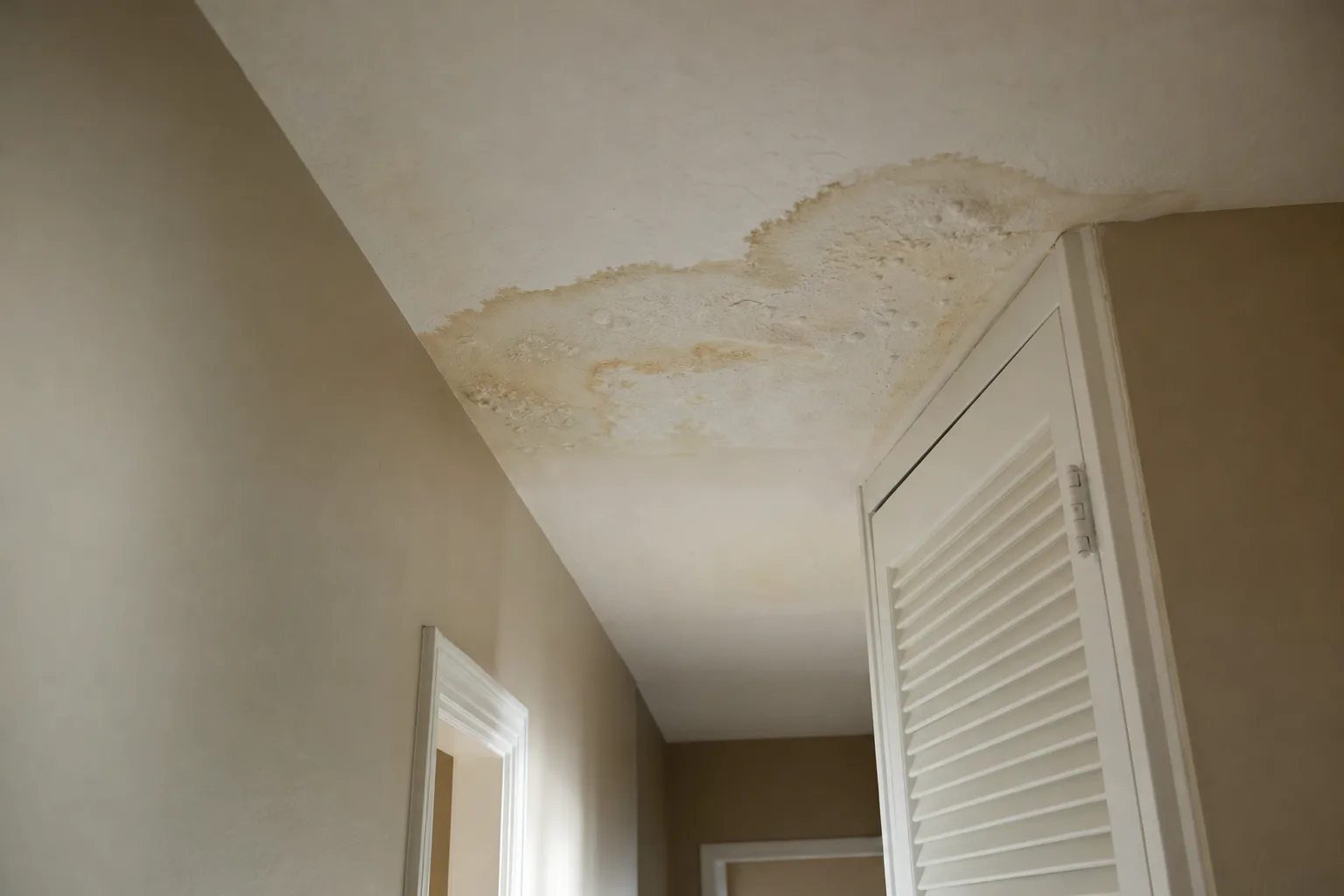
A frozen coil is only half the loss. When the ice melts, the pan receives more water than its drain was built to carry, and the surplus spills toward the ceiling, the floor and the electrical section of the cabinet.
That is why AC leaking water often follows a frozen coil. The ice you saw at breakfast becomes the puddle you find at dinner, and the repair you postponed becomes a ceiling you must dry.
Repair scope
Finding Why Airflow Fell
Professional repair treats ice as a symptom and hunts for the airflow loss behind it. A slow blower motor, a blower wheel that has lost its grip, a coil face coated in grime or a restricted return path each starve the coil of warm air.
The coil is allowed to clear before anyone examines it, because ice hides the real condition of the fins. The repair then goes to the cause, and the unit runs long enough to show that frost does not return.
Frost or ice on your AC? Call now to connect with a local AC repair specialist.
(310) 424-7490State rules and checks
What Decides How Far the Repair Goes
The cause decides the scope. A blower motor that has lost speed is a different job from a restricted return path, and a coil that must be uncovered behind the cabinet is a longer job than either.
Ice that has already melted into your ceiling adds a second job beside the AC repair, and the specialist you reach should say plainly which damage belongs to which job.
How the call works
How a Light Frost Becomes a Solid Block
The first night produces a thin frost that melts by morning and passes unnoticed. A few cycles later the frost survives the off period, then carries into the next run, then the coil turns solid.
A coil frozen solid passes almost no air, and AC not cooling becomes no cooling at all. From AC repair in California outward, your repair path is the same.
Drying verified
Proof That the Coil Stays Clear
A finished repair leaves your coil clear, your registers delivering a steady cold stream and your drain pan dry after a long run. You should see no frost at the line the following morning, and your specialist should explain what restored the airflow.
Leave it switched off
Leave the Ice Alone
Move your thermostat to off the moment you see ice, and leave the coil, the cabinet and the lines untouched. Prying at frost cracks fins and tubing, and a blade near live wiring adds a second hazard.
Whether the blower should run while the ice clears is a repair decision, not a household one. Watch the floor beneath your indoor cabinet and phone in.
Common questions
Questions About AC Freezing Up
Why is my AC unit freezing up?
Airflow across your coil dropped, so the coil surface fell below freezing. A slow blower, a blocked coil face or a restricted return path usually sits behind it, and measurement names which.
Is ice on my outside AC unit the same problem?
It shares the root. Ice on the line entering the outdoor unit means the coil chilled below freezing, and the repair addresses the airflow cause either way.
Can I run my AC to melt the ice?
No. A coil that runs while frozen strains the compressor and floods your pan. Move your thermostat to off and phone in.
A failed part keeps damaging the unit while it runs.
Call before the compressor, the outdoor fan motor or the ceiling below the unit takes the damage.