
You walk to the thermostat and the house is still warm. The outdoor fan sits still, the blower pushes lukewarm air or ice has formed on the line. Each sign points to its own failed part, and describing it clearly is the first step toward repair.
State · ac unit repair
AC Repair in California
The air at your vents stays warm, your unit will not start or water shows up at the indoor cabinet, and you need AC repair in California without guessing at the cause. A single free call connects you with a local AC repair specialist in your area, and you decide whether to hire anyone.
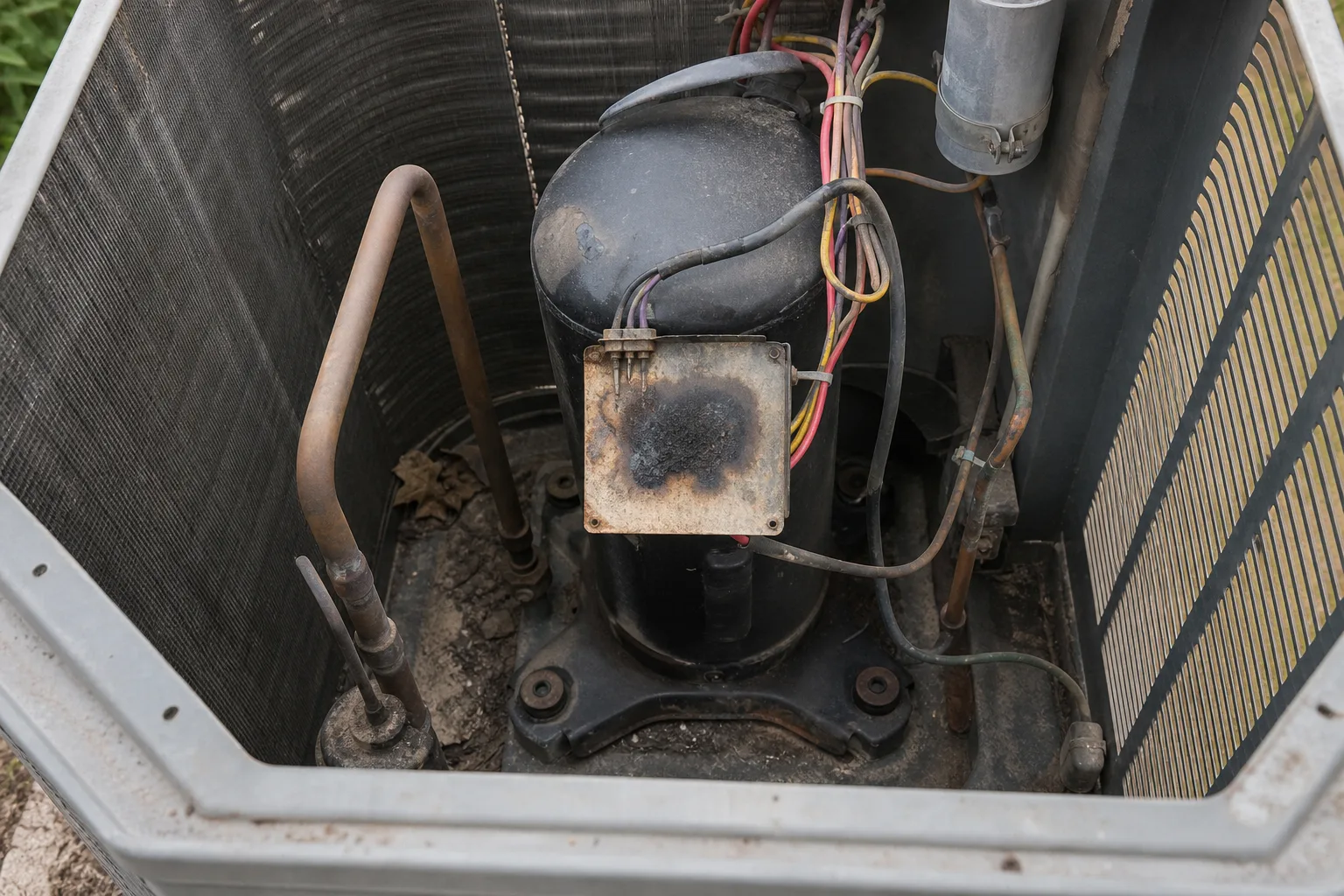
Local conditions
What shapes AC repair in California
Heat and humidity
ClimateCalifornia's average temperature from June through August was 73.9 degrees Fahrenheit across the 30 years from 1991 to 2020. Source: NOAA National Centers for Environmental Information, Climate at a Glance, Statewide Time Series (mean of the yearly June-August values 1991-2020), retrieved 2026-11-16.
Warm summers run the unit for long stretches, so a failing part shows up as a unit that runs without ever reaching the set temperature.Housing stock
HousingThe median housing unit in California was built in 1977, and 55 percent of the state's housing units were built before 1980. Source: U.S. Census Bureau, American Community Survey (ACS 2024 1-year), tables B25035 and B25034, as published by Census Reporter, retrieved 2026-11-12.
Older homes have had more years of cooling-system wear, and an aging outdoor unit or indoor drain path is where repairs concentrate.Checking a business
VerificationCalifornia's state construction license board, CSLB, publishes a public license check on its consumer page for hiring a business for home improvement work. Source: CSLB (California state construction license board), consumer page on hiring for home improvement work, retrieved 2026-11-16.
A California owner can look up a business in the board's license check before signing for AC repair work.Check your ZIP code
Enter the ZIP code of the property to see whether it is in the coverage area for ac unit repair connections.
Call (310) 424-7490What you are seeing
What You Notice First at Your Unit
A unit that runs without cooling belongs with AC blowing warm air, and one that will not start belongs with AC not turning on. Both begin with the same call, and both finish with a repair at the part that failed.
What waiting costs
Summer Run Hours Expose a Weak Part
California's average temperature from June through August was 73.9 degrees Fahrenheit across the 30 years from 1991 to 2020, according to NOAA.
A statewide summer average like that puts a cooling system through long stretches of running, and a weak part shows up as a unit that never reaches your setting.
That pattern is AC not cooling in its plainest form, with motors turning, the compressor never resting and rooms that trail your thermostat. Each extra hour of that run strains the part that is failing.
Warm air, ice or a unit that will not start? Call now to connect with a local AC repair specialist.
(310) 424-7490Housing and heat
What Waiting Costs Your Home
Every hour of running with a fault brings heat to the compressor and wear to the motors, and the rooms remain warm while the meter spins.
A fault caught at the first sign is a part repair, while one left through a summer can become AC compressor repair.
Water adds a second loss, as AC leaking water shows. A drain path that backs up spills into the ceiling and the floor, and the stain spreads each time the unit runs.
Local detail
What California Housing Says About Your Unit
The median housing unit in California was built in 1977, and 55 percent of the state's housing units were built before 1980, according to the Census Bureau's American Community Survey. A home from that era may carry an outdoor unit and an indoor drain path with many years of wear, and those are the places where repairs concentrate.
Leave it switched off
Move the Thermostat to off and Leave the Unit Alone
If your California unit blows warm air, hums without starting, shows ice or drips water, move the thermostat to off. A unit left running with a fault strains its motors and its compressor, and each cycle enlarges the repair.
Leave the panels, the wiring and the outdoor disconnect alone, because live current sits behind each of them. Your part is to stop the unit and place the call.
Repair scope
What Professional AC Unit Repair Covers in California
Professional AC unit repair follows a fixed order. It isolates the failed part, tests the electrical side, checks airflow and drainage, repairs the fault and proves the result with a complete cooling cycle.
The same order applies to a capacitor, a relay, a fan motor or a compressor, and each step rules out causes before any part changes. Your local AC repair specialist names the failed part and explains the repair in plain terms before work starts.
How the call works
From a Small Fault to a Large Job
A weak start part rarely fails in one afternoon. It begins as a slow fan or a late start, and a house that takes longer to cool through the summer.
Heat builds inside the compressor with each hard start, and a failed compressor is the largest job in cooling-side work. Call at the first sign and the repair stays at one part.
State rules and checks
What Drives the Scope of Your Repair
The failed part sets the size of the job. A capacitor or a relay is a brief repair once it is named, a fan motor demands more and a compressor demands the most.
The age of the equipment, the hours it ran with the fault and how easily the unit can be reached all move the scope.
The connection carries no price, because each specialist sets their own. Ask for the failed part, the repair and the price in plain terms before you agree to work.
Drying verified
Checking a Business Before You Sign
California's state construction license board, CSLB, publishes a public license check on its consumer page, and you can check a business there before you sign for AC repair work. The duty to verify rests with you, because each specialist reached through the connection is independent.
Confirm the license the work requires, confirm the failed part is named and confirm the repair ends with a complete cooling cycle you can feel at the registers. The connection does not repair your unit and does not stand behind the work.
Common questions
AC Repair in California Questions
What does AC repair in California cover?
AC repair covers the cooling side of a central or split air conditioner, including warm air, a unit that will not start, ice, water and failed parts such as a capacitor, a fan motor or a compressor. The repair ends with a complete cooling cycle.
Does the connection cost anything?
The connection is free. The specialist you reach sets the price for the repair, and you decide whether to hire anyone.
How do I check a California business before hiring?
Use the public license check that CSLB publishes on its consumer page, and confirm the license and insurance the work requires. The duty to verify stays with you.
Should I keep running my AC if it leaks or freezes?
No. Move the thermostat to off and call. A unit that runs with a drain fault or an iced coil brings damage to the ceiling, the floor and the compressor.
How do I confirm my area is covered?
Enter your ZIP code in the coverage checker on the AC unit repair home page. It shows whether your area is covered and gives no price or estimate.
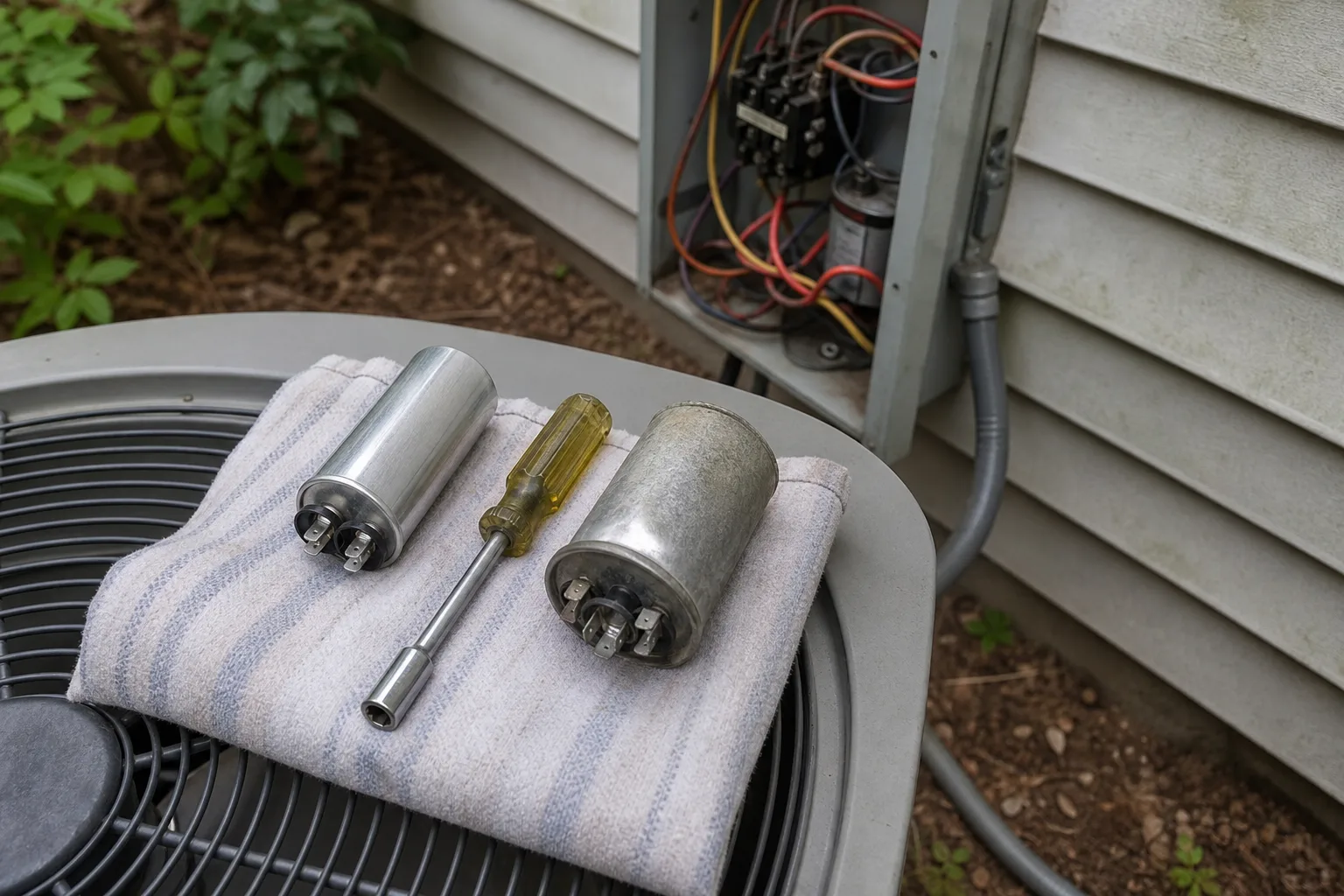
A failed part keeps damaging the unit while it runs.
Call before the compressor, the outdoor fan motor or the ceiling below the unit takes the damage.