
Step toward your condenser and find the fan motionless and the housing quiet while the display on the wall glows. Or your display is blank and nothing snaps inside the cabinet. Those two pictures describe different faults, and telling the specialist which one you see steers the diagnosis.
Guide · ac unit repair
AC Not Turning On
The outdoor condenser stays still while your thermostat display glows, or the display is dark and nothing responds. AC not turning on has one of two roots: power that never reaches your equipment or a command that never reaches the contactor. One phone call connects you with a local AC repair specialist, free and independent.
Check your ZIP code
Enter the ZIP code of the property to see whether it is in the coverage area for ac unit repair connections.
Call (310) 424-7490What you are seeing
Still Outdoors, Dark Indoors or Both
A third pattern is the unit that engages after a long pause and then refuses a second try. Each pattern shows up in searches as an outdoor AC unit not turning on, and each points somewhere along your power path. A condenser with no power also differs from AC fan not working, where the motor gets voltage and cannot rotate.
What waiting costs
How Power Travels From the Panel to the Motors
Line voltage leaves your service panel through a dedicated breaker, crosses the yard in a protected conductor and reaches a disconnect block beside the condenser. From the load side of that block it energizes the contactor, and the contactor energizes the motors.
A break at any joint leaves the outdoor equipment lifeless while everything indoors looks normal. A corroded lug, a conductor gnawed by rodents, a burned-out disconnect cartridge or a contactor coil that no longer pulls shut each cuts the power at a different joint.
Housing and heat
What a Quiet Condenser Costs Your Rooms
Your house climbs through the afternoon without cooling, and the rooms facing the sun pass the point of easy recovery first. Furniture, flooring and electronics endure rising temperatures while nothing seems unusual.
Intermittent power adds its own cost. A contact that closes only some of the time arcs each time it meets, and that arcing pits its surface until the unit stops responding altogether.
Leave it switched off
Do Not Open the Disconnect or the Panel
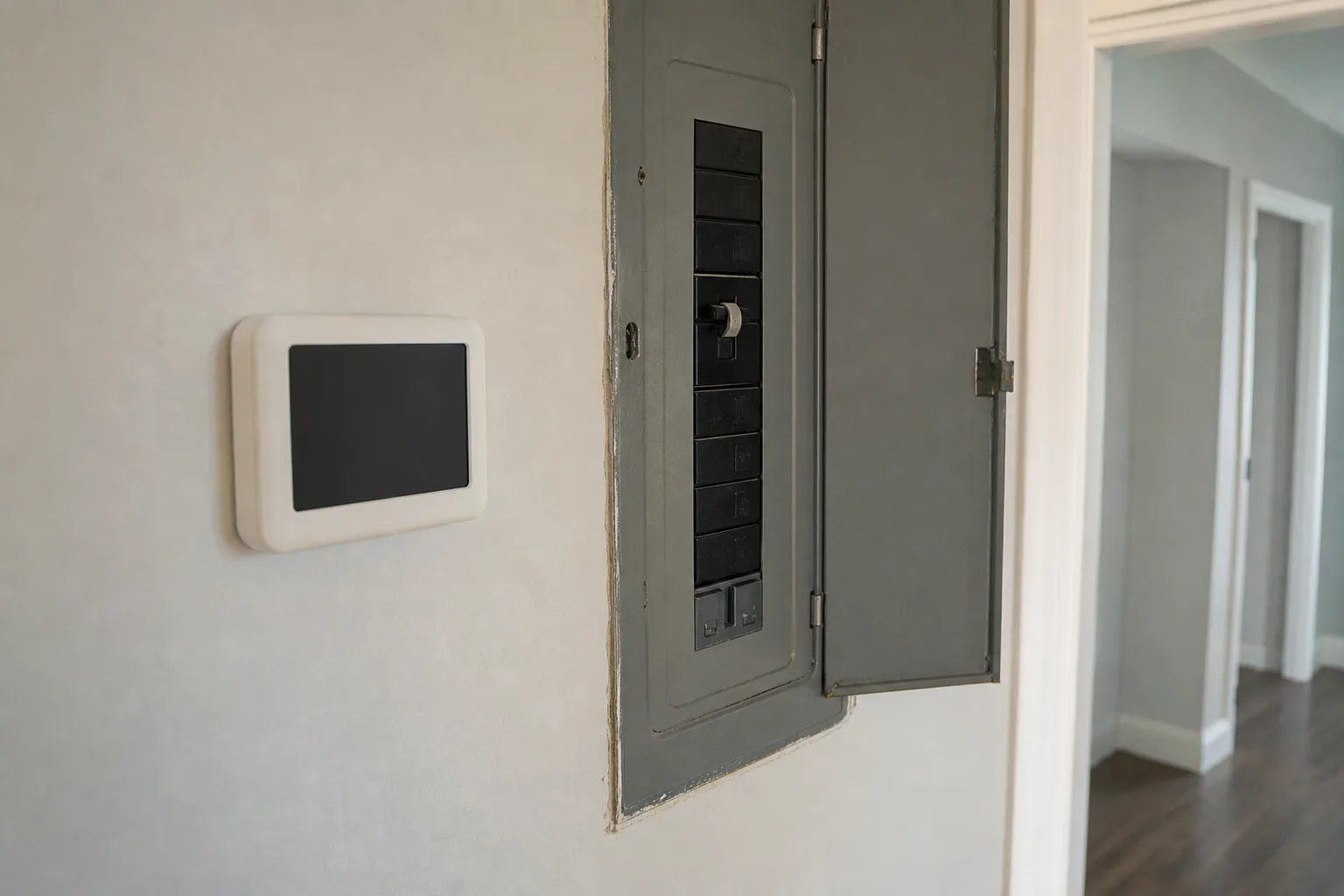
Leave the pull-out block, your breaker panel and the condenser covers closed. High-voltage terminals hide behind each of them, and a look tells you nothing about which terminal is energized.
Move your thermostat to off so a returning supply cannot start the equipment mid-repair, and note what the display, the condenser and the indoor blower each did. Pressing the button again and again only chatters the contact.
Condenser still while the display glows? Call now to connect with a local AC repair specialist.
(310) 424-7490Repair scope
How Professional Repair Follows the Voltage
Professional repair starts at the panel and works toward your motors, reading voltage at each joint: the breaker, the disconnect, the lugs and the coil. The first reading that goes missing marks the fault, and everything downstream of it is cleared without being touched.
That walk also covers the command side. A missing reading at the contactor coil sends the work back indoors to the thermostat wiring, and the repair lands wherever the reading first fails.
How the call works
From a Delayed Start to No Start
A worn contact rarely fails in one afternoon. Your condenser first takes a few seconds longer to engage, then needs several thermostat calls, then engages only after a long rest.
By then your motors have carried repeated strain, and AC compressor repair may be the repair waiting at the end. A phone call at the first delayed start limits the work order to the contact and its wiring.
Drying verified
What a Finished Repair Looks Like
A completed repair restores voltage at every joint, starts your condenser on the first thermostat call and holds the run through the complete cooling demand. You hear the fan spin, feel cooled supply air at the registers and watch the condenser carry on.
Ask for the failed joint and the reading that exposed it before you authorize anything. From AC repair in Massachusetts outward, the same voltage walk applies.
Common questions
Questions About AC Not Turning On
Why is my outdoor AC unit not turning on?
Power is missing somewhere between your panel and the contactor. A tripped breaker, a burned-out disconnect cartridge, a corroded lug or a dead contactor coil are the usual breaks, and voltage readings name which one.
Does a lit thermostat mean my AC has power?
No. Your display runs on its own small supply, while the condenser needs separate line voltage. A lit display beside a still condenser points to the high-voltage side.
Should I press the thermostat button repeatedly?
No. Repeated calls chatter the contactor and wear its contacts. Move your thermostat to off and phone in.
A failed part keeps damaging the unit while it runs.
Call before the compressor, the outdoor fan motor or the ceiling below the unit takes the damage.