
Your thermostat reads several degrees above its setting, the compressor never rests and the supply air feels cool but not cold. Rooms far from the indoor equipment trail the rest, and the afternoon peak outruns what the system delivers.
Guide · ac unit repair
AC Not Cooling
Your AC runs through the afternoon and the rooms still sit several degrees above the setting, so AC not cooling is a capacity problem, not a power problem. The system moves some heat, just not enough, and the shortfall traces to airflow, to the blower or to the outdoor coil. One phone call connects you with a local AC repair specialist, free and independent.

Check your ZIP code
Enter the ZIP code of the property to see whether it is in the coverage area for ac unit repair connections.
Call (310) 424-7490What you are seeing
A System That Runs All Day and Never Catches Up
You may also notice the air feels sticky even as the thermometer improves. That pattern differs from AC blowing warm air, where the heat path has broken outright; here the system still removes heat, only too slowly to win.
What waiting costs
Capacity Equals Airflow Times Temperature Drop
Cooling capacity comes from two quantities: how much air crosses your evaporator coil and how far that air cools on the way. Lose either one and capacity falls, even though every motor in the system still spins.
A blower wheel that slips on its shaft, a blower motor running below speed or a coil face coated with grime cuts the air volume. A weakened condenser fan or a coil packed with debris cuts the heat the system can discharge.
Repair scope
Measuring Where the Capacity Goes
Professional repair measures instead of guessing. The return air against the supply air shows the temperature drop, the blower's speed and current show the volume, and the pressure across your coil shows whether air passes freely.
Each measurement clears or implicates one section of the system. Once the weak section is named, the repair goes to that section alone, and a long run proves your recovery.
Running all day and still behind? Call now to connect with a local AC repair specialist.
(310) 424-7490Housing and heat
What Slow Cooling Costs Your Rooms
A system that runs without catching up burns electricity through the whole afternoon, and the clammy air it leaves behind soaks into upholstery, books and wood trim.
The long run times also wear the equipment. Motors and capacitors built for rest between cycles carry load for hours, and that sustained load shortens their service life, which you pay for twice: once in power and once in parts.
How the call works
From Slightly Behind to Never Cooling
Capacity fades in steps. First your late-day temperature drifts above the setting, then the drift begins at noon, then the system never reaches the setting at all.
A fault caught during the first drift is usually a single component. One you leave running through the summer collects secondary damage, and AC freezing up is the most common companion.
State rules and checks
What Sets the Scope of Your Repair
The weak section sets the scope. A slipping blower wheel is a short visit, a failing blower motor takes longer, and a coil face that must be uncovered takes the longest.
How easily the indoor equipment can be reached and how long it ran short of capacity both move the scope.
Before you agree to work, ask which section was weak and which reading proved it. A clear answer to those two questions separates a repair from a guess.
Drying verified
How You Know Capacity Is Back
A finished repair shows in the numbers and in your house: the supply air runs well below the return, your rooms reach the setting and the run cycles shorten again.
You should hear a steady blower and feel an even breeze from each register. From AC repair in New Jersey outward, the same measurements apply.
Common questions
Questions About AC Not Cooling
Why is my AC running but not cooling enough?
Capacity has dropped. Reduced airflow across your evaporator coil, a slow blower or a weak condenser fan can each cut the cooling while every motor still spins, and measurements show which.
Is a slow-cooling AC the same as a broken one?
No. A system that cools slowly still moves heat, so the fault is usually a single weak component, and an early phone call limits your damage.
Why do some rooms cool while others lag?
Weak airflow reaches the nearest rooms first. A slow blower or a restricted coil leaves the far ones behind, so note which of your rooms trail and report the pattern.
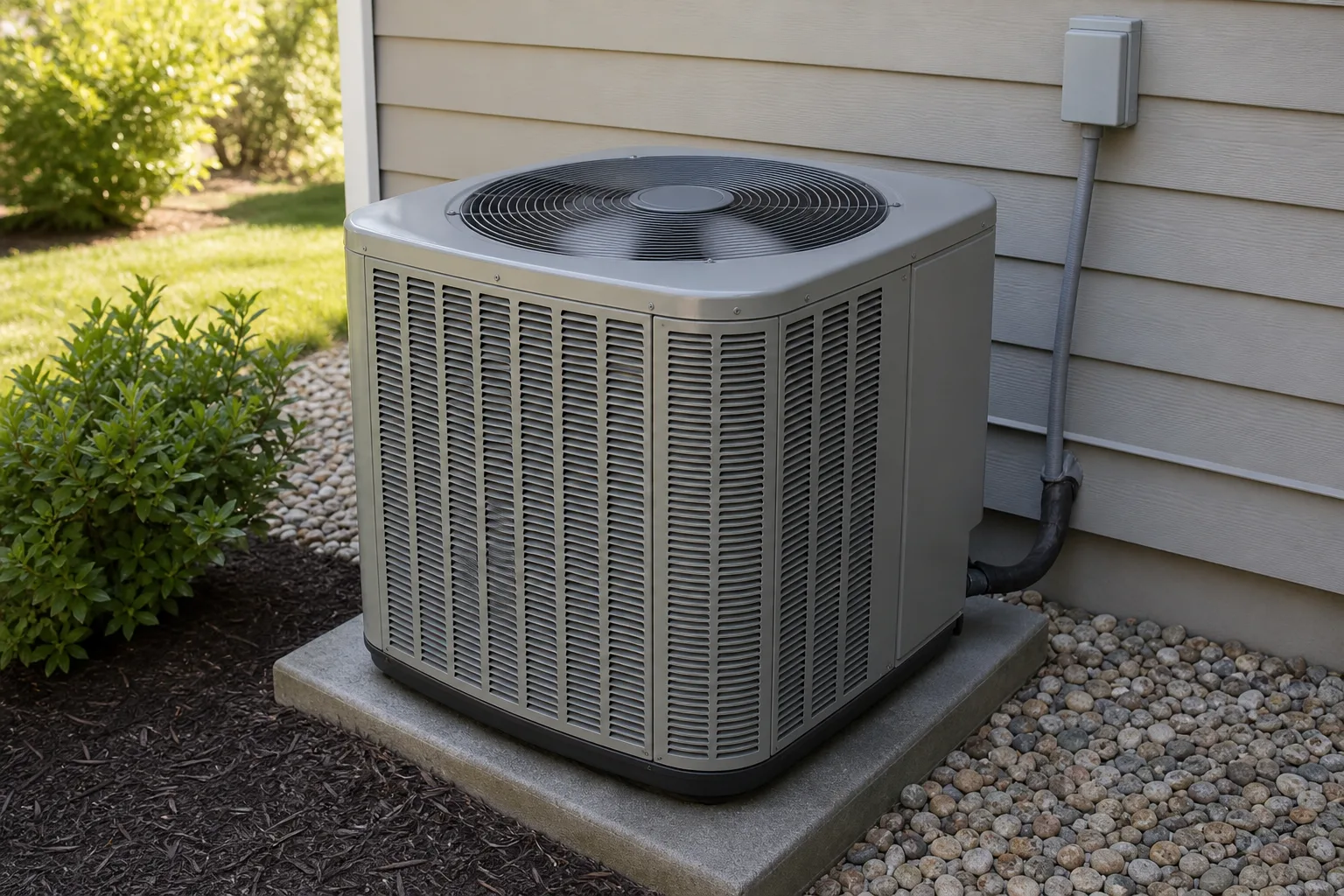
A failed part keeps damaging the unit while it runs.
Call before the compressor, the outdoor fan motor or the ceiling below the unit takes the damage.